
















AI Tools Can Help Aspiring CXOs Develop New Skills And Put Them on a Level Playing Field With More Gifted & Networked Peers, While Experienced CXOs Need to Shed Their AI Inhibitions To Remain Competitive. AI, Like the IPL, Has Broadened The Talent Pool By Enabling Skills-Based Hiring Even As The Competition At The Top Gets Tougher With AI-Savvy Candidates Challenging The Status Quo
By Amit Agarwal & Mala Chawla
There was a time when a strong resume, a distinguished pedigree and the right network would have given you a head start in the race for the most sought-after CXO role. Well, in the AI era, the finishing line has become more cutthroat. Enterprising candidates are increasingly leveraging AI tools to iron out the wrinkles and become competitive alongside their more gifted and networked peers.
In the pre-AI era, a CXO aspirant with a diverse toolkit of hard and soft competencies, multi-skilled and well-connected, seemed to have an advantage over those with just core skills. In today’s world, a candidate can hone their skills with AI tools and compete at the highest level, offsetting limited professional network gaps.
AI Made World Flatter
If the internet made the world flat, AI is making it flatter.
In The World Is Flat: A Brief History of the Twenty-first Century (2005), author and NYT columnist Thomas Friedman analysed 21st-century globalisation. He argued that technology and connectivity have flattened the world by creating a level playing field, allowing individuals and companies to collaborate and compete globally. AI has taken the level playing field to new heights. Competition at the top got tougher with AI-savvy candidates throwing their hats in the ring, unsettling the coterie of the networked.
In the pre-AI era, a versatile CXO talent was the hot favourite. Today, even if one is not extraordinarily skilled, a CXO candidate can, with the help of AI tools, burnish his/her resume and develop emerging skills beyond their core competencies pretty quickly.
There are lessons from IPL, too, which has transformed Indian cricket by creating an ecosystem that fast-tracks talent. For instance, the competition for slots in the Indian team has intensified, with new kids on the block like Vaibhav Suryavanshi, Priyansh Arya, Prince Yadav and Sakib Hussain, among others, shining during this season of IPL. Several gifted IPL players are from modest backgrounds who have been groomed over the years. On the IPL field, what matters today is skill, and not pedigree or networking.
Beware, ‘AI Luddites’
While AI provides aspiring CXOs with opportunities to sharpen their skills, some experienced CXOs may feel overwhelmed by the extraordinary pace of technological change. “AI Luddites”, if any, among CXOs should not be disheartened, but rather learn from history.
In the 19th century, a section of English textile workers opposed the use of certain types of automated machinery. Led by the mythical figure Ned Ludd, these skilled artisans targeted factory owners who used machines to sidestep labour standards, seeing the technology as a threat to their livelihoods. Most were trained artisans who had spent years learning their craft, and they feared that unskilled machine operators were robbing them of their livelihood. The term “Luddite” is now commonly, though not always accurately, used to describe individuals opposed to technological changes.
Stanton Chase’s AI in the C-Suite: Insights from 214 Global Executives study is revelatory. Stanton Chase’s Executive Survey Panel surveyed 214 C-suite executives and board members across 45+ countries and found that 77% of organisations have not moved AI beyond experimentation, 65% cannot show measurable financial returns, and 62% say their leadership teams lack vision beyond tactical AI implementation. Despite these gaps, 59% of executives are more confident in AI than they were a year ago, even though 66% have not experienced a single AI incident.
The resistance to full AI adoption by some may be due to the fear that it will make their skills redundant or lower their professional value. If there are AI Luddites among potential CXOs who show scepticism towards the rapid advancement and integration of AI, they should shed this fear, as organisations are looking for individuals with skills similar to those who run tech companies. Organisations are moving beyond passive adoption and transitioning into an “AI-first” approach by integrating AI into core business strategies, not just using it as a tool for efficiency. Moreover, AI makes you hands-on and helps accelerate decision-making. There is, of course, the lure of lucre as well: AI experience will help enhance the commercial value of a candidate.
‘Humans with AI’ will replace ‘humans without AI’
Historically, tech resistance by Luddites resulted in their marginalisation. “AI Luddites CXOs” would also miss out if they don’t keep pace with technology.
As Harvard Business School professor Karim Lakhani puts it, “AI won’t replace humans—but humans with AI will replace humans without AI.”
Leaders at all levels need a basic understanding of AI concepts, including data analytics, machine learning, and cybersecurity. This foundation fosters an awareness of available tools, routine use cases, and ethical parameters. Cultivating an AI-first mindset means viewing AI not as a tool but as an integral element for improving the productivity of personal practices. Leaders must let go of fears about AI replacing jobs and instead embrace its potential to augment human capabilities.
Human Values, Judgment Matter Most
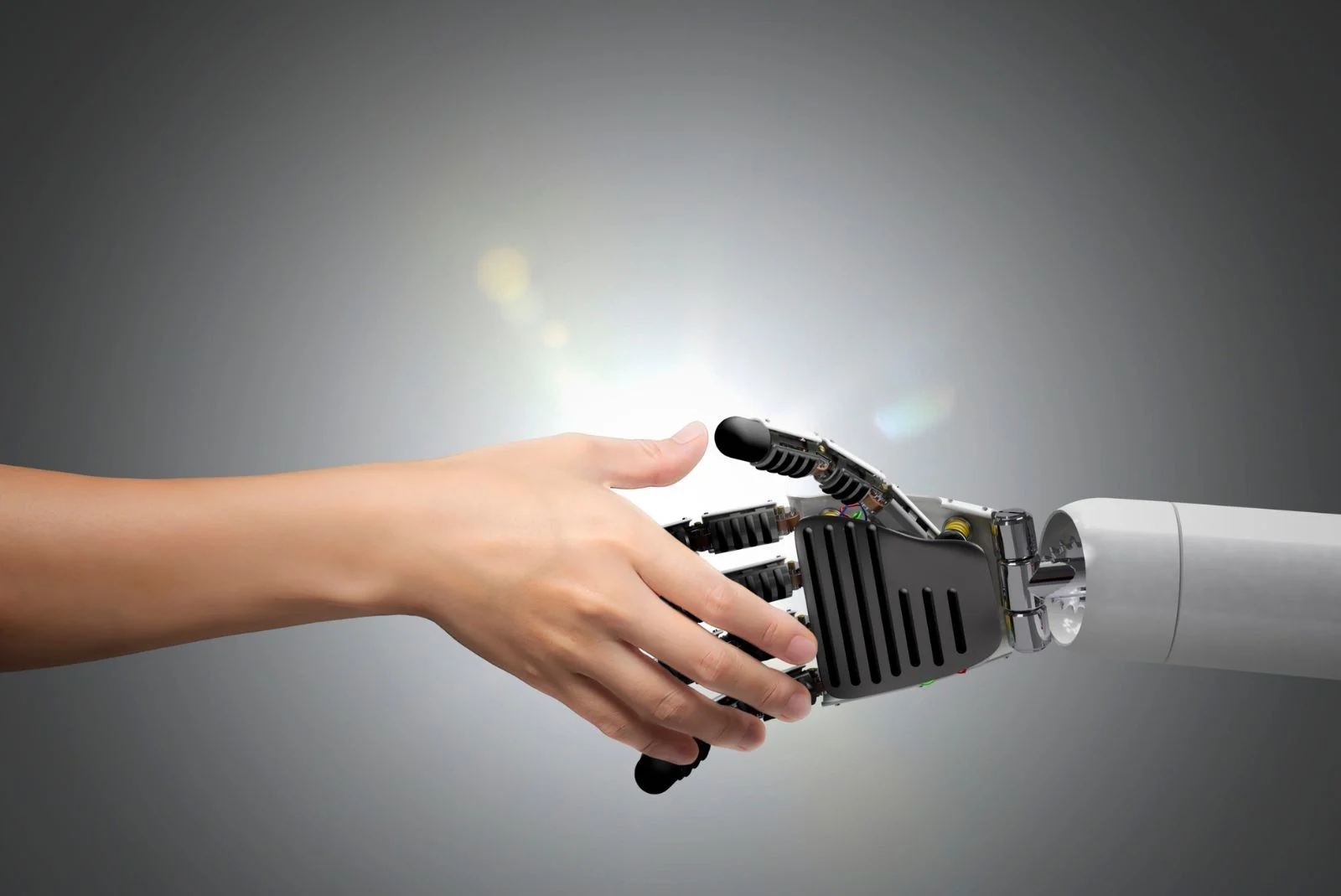
In this AI-driven world, human input has gained significance. AI can analyse data, but it cannot replace human judgment, empathy, or strategic leadership. Business leaders can combine AI power with strategy and empathy to deliver value. Leaders who can work on relationships and bring empathy to the organisation will stand out. Leaders must reimagine how humans and AI collaborate to harness AI’s potential and bridge the gap between technological capabilities and strategic goals.
According to Harvard Business School professor Marco Iansiti, “Although AI can perform many tasks faster and at a greater scale than humans, it often struggles in situations that demand human judgment, connection, and interpretation. As a result, these skills become a meaningful competitive advantage for individuals seeking to future-proof their careers and for organisations navigating digital disruption.”
Machines have yet to replicate every human skill. While automation concerns are understandable, several critical skills remain uniquely human that AI still struggles to perform effectively and reliably. Developing these capabilities can help you build career resilience and strengthen your value in an AI-enabled workplace.
AI Tools Help Bridge Gender Gap
AI tools are also helping bridge the gender gap by expanding opportunities for women candidates, especially for roles once dominated by men. Aspiring women CXOs can leverage AI to accelerate their careers and overcome structural hurdles.
According to a 2025 McKinsey report, women hold less than 20% of C-suite positions in India, despite relatively higher representation at entry levels. The report pointed to low recruitment, high attrition, and limited career advancement as major hurdles for women in corporate India. Women at the CXO level in India face a substantial pay gap, too, earning significantly less than their male counterparts
While organisations must ensure that their hiring and promotion processes are free from bias, aspiring women CXO candidates, on their part, should use AI tools to upskill and gain a competitive edge, which can also boost their compensation.
From Era of Execution to Age of Strategy
Artificial intelligence is changing the role of CXOs and organisations’ expectations from him/her. Earlier, a CXO position demanded equal parts strategic thinking and operational execution. In the AI era, there is a marked increase in the strategic part. AI tools can help leaders accelerate moving from operational execution to high-level strategic leadership. CXOs with experience in delivering accelerated growth in an AI-driven economy will have an advantage. And those looking to build a CXO career should use AI while transitioning from a functional manager to a strategic leader.
AI, like the IPL, has broadened the talent pool by enabling skills-based hiring. Using AI is critical for both_ experienced CXOs to remain relevant and for aspiring CXOs to become competitive. The former can’t rest on past laurels, while the latter must use AI tools to become multi-skilled, as many are doing.
The authors are managing directors, India & Singapore, Stanton Chase
“Use AI and do not get used by AI”
- Leverage AI tools for upskilling
- AI makes you hands-on and helps accelerate decision-making
- CXOs have to remain strategically ahead of the curve
- AI experience will help enhance the commercial value of a candidate
- Embrace predictive forecasting and automation, wherever required for business growth.
‘AI No Alternative to Performance’
- AI complements your skills, and is not a substitute for them
- Don’t rest on past laurels; work is to be done every day
- In this AI-driven world, human input has gained significance
- AI can be a means to an end, and not an end in itself
- Leaders must combine AI power with strategy and empathy
- AI, like the IPL, has broadened the talent pool by enabling skills-based hiring. Using AI is critical for both_ experienced CXOs to remain relevant and for aspiring CXOs to become competitive. The former can’t rest on past laurels, while the latter must use AI tools to become multi-skilled, as many are doing.
- If there are ‘‘AI Luddites “ among potential CXOs who show scepticism towards the rapid advancement and integration of AI, they should shed this fear, as organisations are looking for individuals with skills similar to those who run tech companies.
- In this AI-driven world, human input has gained significance. AI can analyse data, but it cannot replace human judgment, empathy, or strategic leadership. Business leaders can combine AI power with strategy and empathy to deliver value.