


















Most organizations do not have a learning problem. They have a translation problem.
Budgets are allocated. Courses are completed. Platforms are launched. Yet when strategy pivots or markets shift, capability gaps remain stubbornly visible. The disconnect is rarely about access to content. It is about the distance between learning activity and performance reality.
For years, learning has been treated as an event layered onto work. A program is designed, delivered, evaluated, and archived. Participation is tracked. Satisfaction is measured. Then employees return to environments whose incentives, decision rights, and time pressures remain unchanged. Unsurprisingly, behavior reverts.
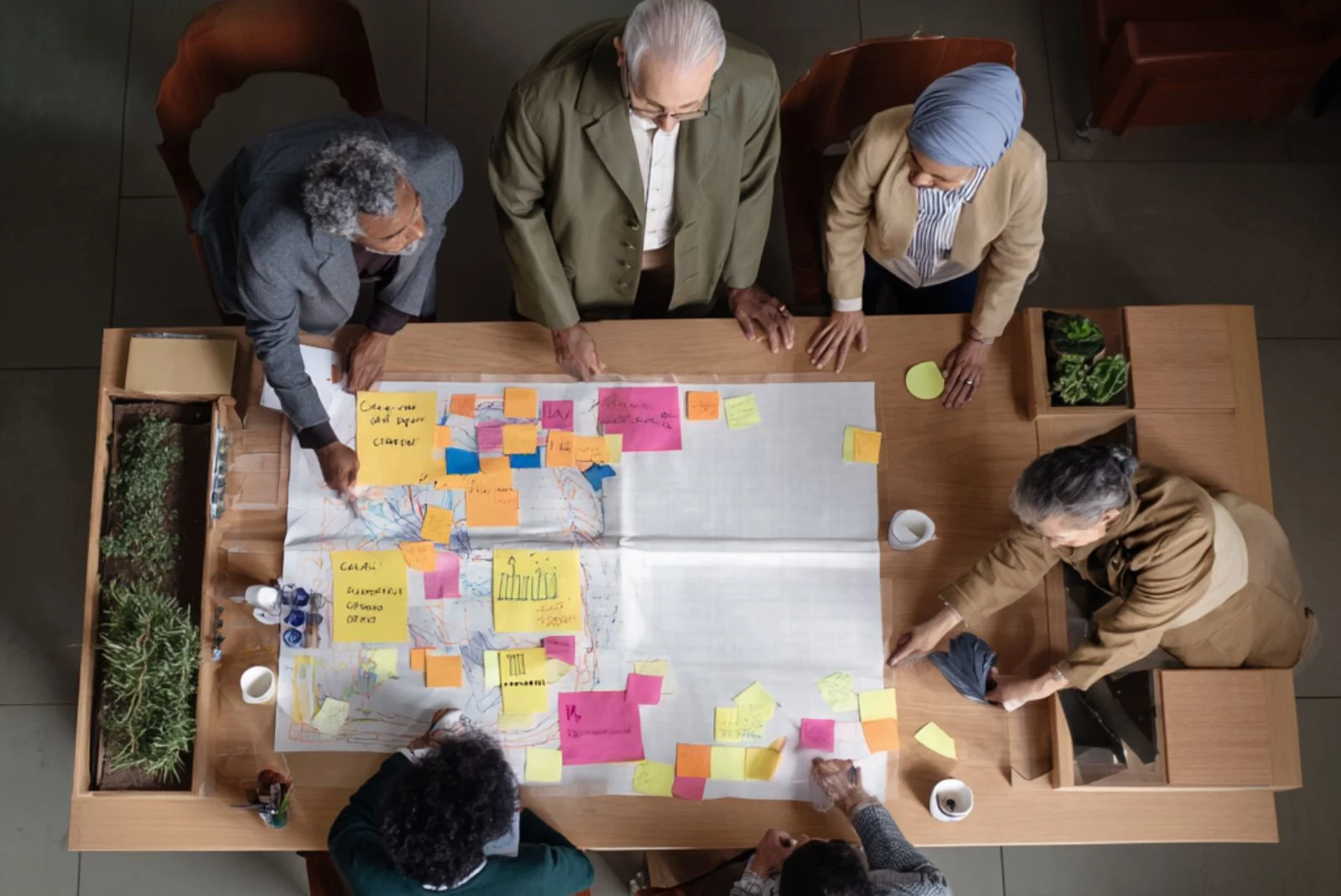
The shift from learning programs to learning ecosystems begins with a different premise: capability is built where work happens, not where slides are presented.
The Learning Ecosystem
- Learning Embedded in Everyday Work
- From Knowledge Transfer to Capability Building
- Managers as Capability Catalysts
- Continuous Learning Over Episodic Training
- Skills Development Aligned with Strategy
- Learning as a Competitive Advantage
An ecosystem is not a platform. It is a network of reinforcing elements—manager expectations, stretch assignments, peer feedback loops, digital resources, performance metrics—that embed development into execution. In this model, learning is not a detour from productivity; it is a design feature of it.
The tension lies in time horizon.
Organizations that embed learning into work will adapt faster than those that treat learning as an event.
Organizations operate under quarterly pressure. Learning investments often show lagged impact. The return on a leadership development initiative may not surface for years, visible only when a succession transition unfolds smoothly or a crisis is navigated with composure. This temporal gap makes learning vulnerable to budget compression when margins tighten.
Yet adaptability is cumulative. Companies that underinvest in capability during stable periods discover the cost when volatility accelerates. Innovation stalls because teams lack cross-functional fluency. Execution slows because managers have not developed decision discipline. Resilience weakens because leadership depth is thin.


The evolution toward ecosystems requires redistributing ownership. Central learning functions can curate frameworks and tools, but capability building cannot remain centralized. Managers must be evaluated not only on output but on the growth trajectory of their teams. Project allocation must be viewed as developmental architecture, not merely resource optimization.
There is also a qualitative shift underway—from knowledge acquisition to capability development. Knowledge is portable and increasingly commoditized. Digital access ensures information abundance. Capability, by contrast, emerges through application under constraint. Negotiating a complex stakeholder landscape, making a high-stakes trade-off, leading through ambiguity—these cannot be absorbed passively.
This introduces a trade-off between depth and speed. Immersive learning experiences cultivate reflection and integration, yet they remove individuals temporarily from operational roles. Micro-learning modules preserve productivity but may lack transformational impact. An ecosystem balances both, sequencing exposure rather than defaulting to convenience.
Standardization presents another tension. Global organizations seek consistent capability benchmarks across regions. Yet learning is inherently contextual. A uniform curriculum may ensure coherence but fail to address local realities. Ecosystems accommodate personalization within shared principles, allowing adaptation without fragmentation.
Why do most interventions fail to translate into performance? Because infrastructure is mistaken for culture. Providing tools does not ensure usage. Launching platforms does not create curiosity. A learning culture is evident when leaders publicly reflect on mistakes, when experimentation is not penalized reflexively, when feedback flows upward as readily as downward.
Measurement must also mature. Completion rates and satisfaction scores offer limited insight. More telling indicators include internal mobility velocity, succession readiness, cross-functional collaboration density, and time-to-competence for critical roles. These metrics link learning to enterprise outcomes rather than participation.
The most overlooked aspect is sequencing. Learning ecosystems require architectural patience. Capability investments made today may influence strategic agility years later. Organizations accustomed to immediate ROI struggle with this lag.
Ultimately, the question is not whether to invest in learning. It is whether learning is embedded deeply enough to shape how work is designed and how leaders are evaluated.
If learning remains episodic, adaptability will remain episodic. If it becomes systemic, capability compounds.
The strategic challenge is less about building better programs and more about redesigning the organization so that development is inseparable from execution. Whether leaders are prepared to make that shift will determine whether learning is a function—or a competitive engine.